What Is a Civil Restraining Order?

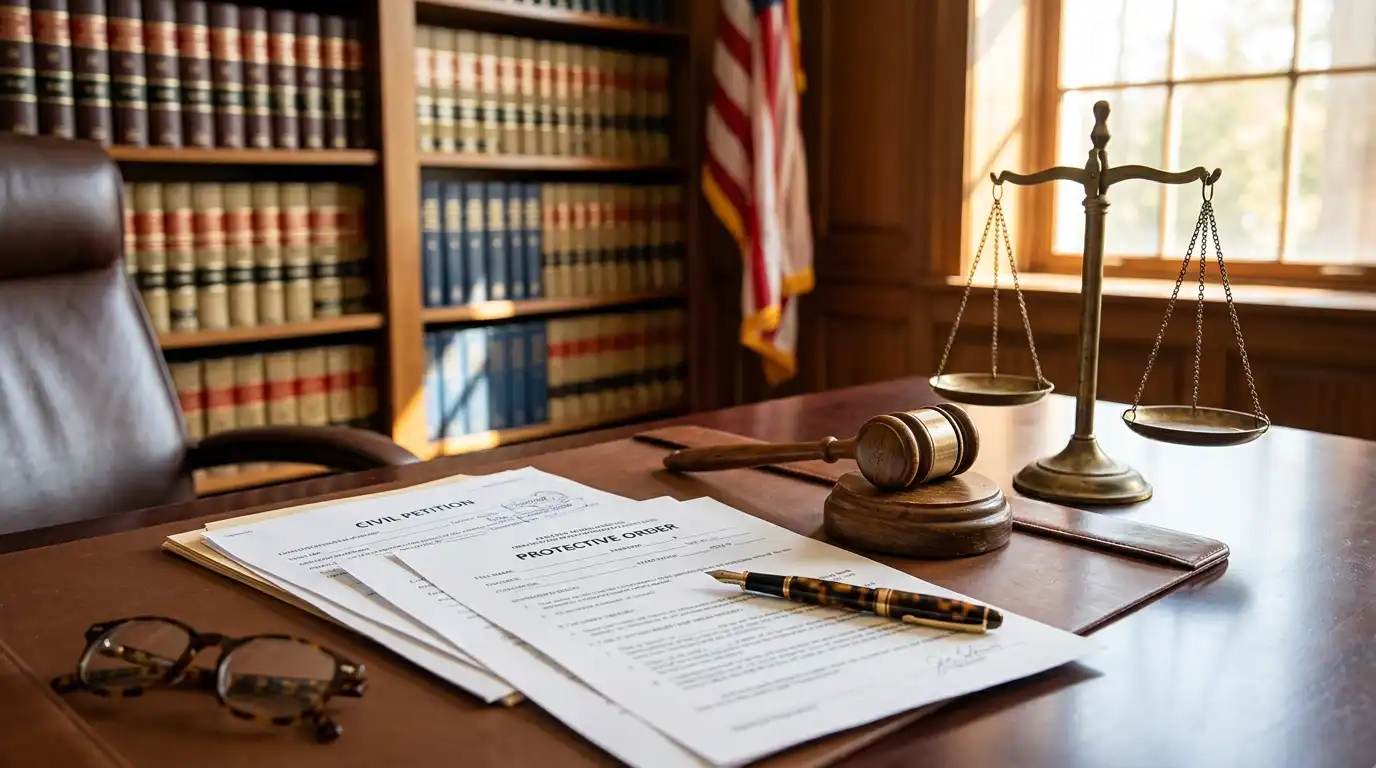
A civil restraining order (often referred to as a Civil Protection Order or Order of Protection depending on state jurisdiction) is a legal order issued by a civil or family court judge. The primary purpose of a civil order is to prevent future harm, harassment, or unwanted contact between private individuals.
In a civil proceeding, the individual seeking protection is called the petitioner or plaintiff, while the person being restrained is called the respondent or defendant. Crucially, a citizen can file a civil petition independently—even if law enforcement never responded to an incident and no criminal charges were ever filed.
Common Types of Civil Orders:
- Domestic Violence Restraining Orders: Designed for individuals who share an intimate relationship, marriage, cohabitation, or child custody arrangement.
- Civil Harassment Orders: Applicable to non-family relationships, such as disputes between neighbors, coworkers, acquaintances, or strangers.
- Elder or Dependent Adult Abuse Orders: Tailored to protect vulnerable seniors or dependent adults from physical, emotional, or financial exploitation.
- Workplace Violence Restraining Orders: Requested by employers to protect employees from threats or violence in the workplace.
What Is a Criminal Protective Order?
A criminal protective order (CPO) is issued within the criminal justice system as a direct result of active criminal charges or a pending prosecution. When a law enforcement agency arrests a suspect for domestic battery, assault, stalking, or harassment, the state prosecutor or district attorney requests a protective order on behalf of the victim or witnesses.
Unlike civil petitions, the victim does not file the court paperwork to initiate a criminal protective order. Instead, the state prosecutor requests the order, and the criminal court judge issues it—frequently during the defendant’s arraignment or as a formal condition of bail or sentencing.
For detailed statutory guidelines on how courts handle victim and witness protection in federal or state matters, review legal resources published by the Legal Information Institute (LII) Protective Order Overview.
Key Differences Between Civil and Criminal Orders
Understanding how these orders compare side-by-side helps citizens navigate court hearings effectively.
1. Who Initiates the Action?
Civil orders are initiated directly by the private citizen seeking protection. Criminal protective orders are initiated by government prosecutors or requested by police officers in active criminal cases.
2. Burden of Proof
Because civil cases are private disputes, the legal standard of proof is lower. In most civil hearings, a petitioner must satisfy the preponderance of the evidence standard—meaning the evidence shows it is more likely than not that the harassment or abuse occurred.
In contrast, criminal proceedings require prosecutors to establish guilt beyond a reasonable doubt to secure a criminal conviction. However, judges often issue preliminary criminal protective orders upon a showing of probable cause during initial bail hearings.
3. Duration and Expiration
Civil restraining orders usually begin with a Temporary Restraining Order (TRO) lasting 14 to 21 days until a full evidentiary hearing occurs. If granted by a judge, a permanent civil order typically lasts between one and five years, with options for renewal.
Criminal protective orders generally remain tied to the active criminal case. If the defendant is convicted, the judge may extend the protective order for up to ten years as part of the post-conviction criminal sentence.
For more insights on victims’ civil rights and court procedures across state systems, explore educational materials provided by WomensLaw.org Court System Basics.
What Happens When an Order Is Violated?
Although a civil restraining order originates in civil court, violating its provisions is a serious matter. In almost all U.S. jurisdictions, knowingly violating a valid civil or criminal protection order constitutes a criminal offense (often charged as contempt of court or a misdemeanor).
If a restrained person violates distance restrictions, attempts communication, or engages in prohibited conduct, law enforcement officers have the authority to make an immediate arrest upon probable cause.
Steps for Citizens Seeking Protection
- Document Every Incident: Save text messages, voicemails, emails, social media interactions, photos of injuries or property damage, and police report numbers.
- File the Petition: Visit your local county courthouse clerk’s office or legal aid center to complete the required civil petition packets.
- Attend the Court Hearing: Present your documented evidence clearly to the judge during the scheduled hearing.
- Keep Copies Accessible: Always keep certified physical and digital copies of your granted protection order with you, in your vehicle, and on file with local law enforcement.
Conclusion
Navigating protection orders requires understanding which court avenue offers the fastest, most effective relief. While criminal protective orders rely on law enforcement and prosecutors during active criminal cases, civil restraining orders give private citizens the direct power to request legal protection whenever their safety or peace of mind is threatened.